

The pros and cons of the filler Hollofiber.
Content
- What is Hollofiber?
- Filler Hollofiber: Pros and Cons
- Hollofiber: What temperature, weather is designed?
- What is the difference between a synthetic winterizer from Hollofiber?
- Which is warmer and better: Hollofiber or Synthond, artificial and natural fluff?
- Coat Women's Winter, Winter jacket, children's overalls, blanket, pillow, mattress: better on Hollofiber or Syntipone?
- Is it possible and how to wash Hollofiber in a washing machine?
- Video: Hollofiber filler filler
Colds came, and most people climbed into cabinets for down jackets and jackets. For many, winter is associated with large arc jackets filled with goose fluff, as well as fur coats. But now a huge amount of vertebrates filled with Hollofiber has appeared on the market. In this article we will figure out what kind of filler and its features.
What is Hollofiber?
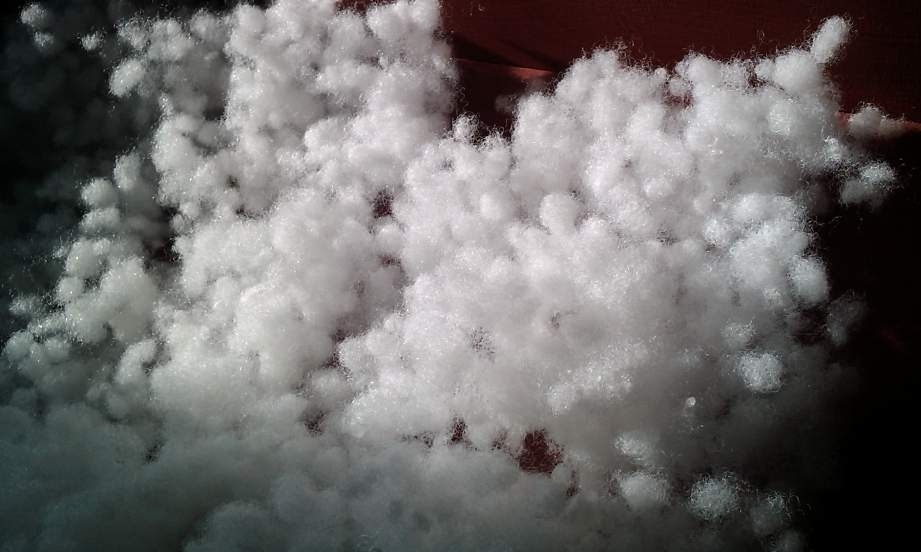
This is a synthetic non -woven fiber of the polyester group. The structure is very similar to a synthetic winterizer, but is characterized by the lack of use of glue in production. Hollofayber is based on a spiral -shaped silicone fiber, which is fastened by soldering at high temperature. The result is long fibers.

Filler Hollofiber: Pros and Cons
There are many positive properties of this material:
- Light weight
- Excellent thermal conductivity and ability to retain heat
- Low price
- Hypoallergenicity
- Does not absorb odors
- Not electrified
This insulation does not have negative sides. Unless he is slightly inferior in heat capacity to goose pen.
Hollofiber: What temperature, weather is designed?
Now the market has a huge amount of outerwear with Hollofiber. This is due to a low price. The down jacket costs one and a half times cheaper than natural. At the same time, it is not inferior in quality. Before answering the temperature norms, it is worth determining the density of the filler. The minimum operation temperature depends on this figure.
Temperature norms:
- Density 100 g/sq.m. - from +10 ° C to +5 ° C
- Density 150 g/sq.m. -from +5 ° C to -10 ° C
- Density 200 g/sq.m. -from -10 ° C to -20 ° C
- Density 300 g/sq.m. -from -20 ° C to -30 ° C

What is the difference between a synthetic winterizer from Hollofiber?
In principle, the material is made of the same fibers, but according to different technologies. A synthetic winterizer is a type of silicone fibers, like Hollofiber, but all the fibers in it are glued. In the Hollofiber, the strings are connected to each other at high temperatures without the use of glue. Inside the fibers, the void, which makes the material light and very warm. Thus, Hollofiber is much lighter and warmer than synthetic winterizer.

Which is warmer and better: Hollofiber or Synthond, artificial and natural fluff?
A synthetic winterizer is not the best insulation, as it gets wet and accumulates moisture. At the same time, the material has a low rate of thermal insulation. He is an order of magnitude higher with Hollofiber.
A competitor to Hollofiber is natural fluff. Products from it are as warm as possible. But Pooh has one huge drawback - price. In addition, fluff gets wet in rainy weather. There are also some difficulties in washing down jackets with a natural pen. If you take into account all these indicators, then Hollofiber is ideal.

Coat Women's Winter, Winter jacket, children's overalls, blanket, pillow, mattress: better on Hollofiber or Syntipone?
Disadvantages of synthetic winterizer:
- Low thermal insulation ability
- Accumulates moisture
- Absorbs smells
- Quick enough
Accordingly, Hollofiber is deprived of these shortcomings. That is why such a filler is better. Due to the special method of siliconization, Hollofiber does not accumulate moisture, therefore it is successfully used for the production of blankets and pillows.
If there is a choice between Hollofiber and synthetic winterizer, when buying a children's overalls, then choose the first option.
Is it possible and how to wash Hollofiber in a washing machine?
Yes, products from this filler can be safely washed in the car. At the same time, it is worth considering the features of the upper fabric. After all, Hollofiber can be washed even at a temperature of 80 ° C. But due to the fact that down jackets are painted and made and raincoats, the optimum washing temperature is 40 ° C. At the same time, the products can be squeezed, because Hollofiber is perfectly dealt with after washing and spinning. It does not need to be shaken like fluff.
You can wash not only down jackets, but also blankets, pillows and covered with Hollofiber. It is these products that can get dirty. Only now there is no need to take them into dry cleaning. You can wash yourself in a washing machine.

Hollofiber is an excellent filler that will serve as an excellent alternative to natural fluff. It is just as warm, but much cheaper.
Video: Hollofiber filler filler



The denser the material, the usually it conducts heat better (colder), although it is less blowing.
I already want a warm down jacket, tired of these thin down jackets for fluff !!! For fluff, the down jackets are very cold, you always have to wear 2-3 warm sweaters, so that in -20, -30 to feel warm, and not permeating cold. This time I will buy a down jacket at the Holo -Fiber. And I advise everyone.
Well, I would argue with the price, we took a very expensive down jacket at the Holofiber for the child. So the price is not inferior
Winter has not yet arrived, and I freeze in this renocial down jacket. Money right