
A detailed description of varieties, growing and care of hyacinth.
Content
- Giacintic plant: legends and beliefs
- Flowers of hyacinths - varieties: water, eastern, mouse muscari, leguminous, wild
- Hyacinths: landing, care and cultivation from the bulb in the garden in open ground
- Video: Planting hyacinth in open ground
- Hyacinths: landing, care and growing in a pot, in indoor conditions
- Video: Giacinth cultivation at home
- Planting hyacinths in spring and autumn
- Video: Hyacinth care in spring and autumn
- When hyacinths get and bloom, how many times they bloom?
- Hyacinth: How often to water in a pot and in the garden?
- Hyacinths have faded: what to do with them?
- When to dig hyacinths after flowering, what to do with the bulb in the pot?
- What to do with a bulb in a pot?
- Do I need to dig hyacinths every year, how to store?
- When to transplant hyacinths after flowering and after purchase?
- Hyacinth propagation: onion, seeds, leaves
- Video: Hyacinth Propility
- Why don't hyacinths bloom or bloom badly?
- Hyacinth: Diseases
- Water hycinth for aquarium
- How to grow hyacinth from seeds, what do seeds look like?
- Is it possible to keep hyacinths in the bedroom?
- Video: Growing water hyacinth at home
In this article you will learn about a beautiful flower called hyacinth. The care process and all problematic issues will be resolved after reading this information.
Giacintic plant: legends and beliefs
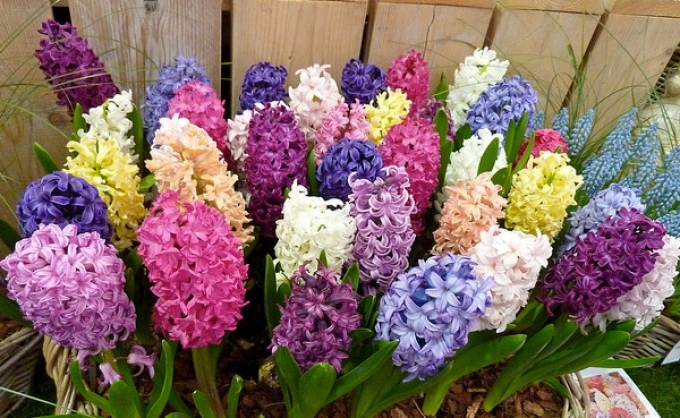
Hyacinths are flowers of incredible beauty and delicate, but at the same time saturated drunken aroma. They are one of the first And they are enchanted with their beauty and a variety of colors.
The flowers are not very picky and are great for both the garden and for a indoor plant. Each person will find for himself his favorite color, which fascinates with tenderness and at the same time color saturation. There are many legends and beautiful stories about hyacinte.
One of them is about the favorite of Apollo - a young man of hyacinte. During the competition, the guy was wounded in the place where his blood dripped the flowers, which after and appropriated the name of the young man.

The land of the Middle East, the northern part of Africa and the Mediterranean are considered the real homeland of hyacinths. The second homeland in Europe for Hyacinth became Holland, which made a lot of efforts for its further distribution.
Flowers of hyacinths - varieties: water, eastern, mouse muscari, leguminous, wild
In nature hyacinth water The Amazon river grows in the pool of the river, where a very comfortable temperature all year round. In most cases, the flower is located on the water, and its roots are under water. It can bloom at any depths of freshwater rivers.
This plant has large oval leaves, formations that are filled with air and hold it on the surface of the water, like a float. It blooms only for one day.
Six-shirty flowers of lilac color with a dark blue middle and long stamens. Having pollinated, the seeds fall into the water and grow rapidly at a warm, comfortable temperature and enough light.

Special care for it is not needed, it is important to remove intensively growing shoots in time and do it carefully so as not to irritate the skin on the hands. With a decrease in water temperature, flowers are moved to a special place filled with water.
If the hyacinth winter in the apartment, then it is necessary to periodically moisturize the air and ensure that the bulbs are constantly in the water, avoid drafts, but there should be enough fresh air in the room. It is categorically impossible to cover the flower with containing containers and store in basements or darkened rooms. The duration of the day should be at least twelve hours.
East hyacinth - Perennial plant, propagating with the help of scaly bulbs, which have the same color as the flower. The best varieties of this species:
- Snow -white
- Delicate sunny color
- Saturated blue
- All shades of purple and orange
- From dark red to gently pink
- Black hyacinth

Muscini Muscari It differs from other species with barrel -shaped peduncles: blue, purple and white. They take root well with other types of onions in soils that are able to survive harsh winters, grow in one place with good care, up to twelve years. Hyacinth can be grown in an apartment or house in winter.

Beaver curly hyacinth It can be either an annual or a perennial climbing plant. In his homeland in warm Asia and Africa, it has grown in one place for many years, and in less hot countries only one year.
It differs in that it is entrusted with a special device counterclock-wise. The leaves in structure are similar to the leaves of beans, but have different coloring: red-violet, green or purple.
The attention of not only the unusual shape of the leaves is attracted, but also very beautiful fruits that will decorate any, well -lit terrain. In the autumn period, bright yellow, saturated green leaves and colored fruits look especially beautiful. It is very important to monitor moisture, it is needed for intensive growth, but the plant in acidic soils strongly inhibits.
Wild hyacinth, hyacinthoid, Spanish spray, hyacintoide - this is the name of one flower, which is an important part of the floral exposition in the gardens of many European countries. Its leaves have a long shape, a high peduncle, on which bright blue, purple, pink flowers are placed in the form of a bell.

It blooms mainly in wet and moderate weather up to three weeks. During intensive growth, it is advisable to use mineral additives. To improve flowering, it is better to transplant the plant every three years and cover for the winter, to protect against severe frosts. It fits perfectly into a home flower bed, on an alpine hill, and among stones.
Hyacinths: landing, care and cultivation from the bulb in the garden in open ground
Before planting a flower in the ground, you need to prepare a place in advance. Some believe that hyacinth can be planted in the shade of trees and shrubs, since it blooms very early, when there are no leaves on the trees. But in order for him to delight you with his amazing flowers, he needs well heated The sun, protected from strong winds.
It is also necessary to take into account the level of groundwater and perform a number of preventive measures to protect the plant. Fertilizer from humus is perfect, but not fresh manure. For the preparation of the meadow for landing, one and a half to two months, starting in August, is taken.

In order for the bulbs to be rooted, they are planted to a depth of eighteen centimeters, at the end of September, at a distance of about 15cm. To protect against decay into the hole, you need to add sand and cover the trees with leaves for the winter.
During intensive growth, you need to do the top dressing twice, after the hyacinth has dried up the peduncle and leaves, you need to dig out the bulbs. If this is not done, then the next year the flowers will be smaller. The weeks are enough for the dug on bulbs to dry out, then they need to be folded in special boxes and stored at room temperature and planted in the ground at the end of September.
Growing hyacinths requires significant attention and care. The Earth should be moistened by 10-12cm. You also need to remove peduncles affected by diseases, and, if necessary, the whole plant. Three times it is recommended to feed with complex fertilizers while regularly falling away the ground.

At the end of the first month of summer, the preparation of the plant for winter begins. When storing bulbs, for 95 days it is necessary to maintain constant humidity in the room and ventilated. Before planting, you need to put the bulbs in a cool room, to adapt to low temperatures. They multiply by the formation of about 4 children.
Video: Planting hyacinth in open ground
Hyacinths: landing, care and growing in a pot, in indoor conditions
At home, hyacinths are grown as follows:
- Pre -selected bulbs are planted, checking them for the lack of damage.
- Large bulbs are selected (more than 5 cm in diameter), from which it is easier to grow a chic flower and treated with a special solution.
- The pot should be wider than the bulb and shallow with large drainage holes.
- It is better to buy soil or mix the ground with leaves, compost, humus and pour sand and peat in the same parts.
- Once every two years, flowers need to be planted on the bed in open ground, for recovery.
- The flowering plant is attributed to a room where there is a lot of light and air temperature, no higher than 20 degrees and there is no draft.

You can timid the flowering of the plant to certain holidays: if you plant the onion in October, the plant will bloom by the New Year, if in November, then you can give a flower to your beloved girl for Valentine's Day, and if in December, you can expect flowering by March 8.
After the flowering period, peduncles are cut off and continued to water and fertilize until completely dry, so that the onion is large and with the children.
Video: Giacinth cultivation at home
Planting hyacinths in spring and autumn
It is best to plant flowers in open ground in September to a depth of 15-18 cm, choosing the middle bulbs, processing them before planting in a solution of fungicide. Many experts do not recommend planting bulbs in the spring, since they will not have time to take root and throw a peduncle.

If you plant in the spring, then the rooting and growth of leaves occurs at the expense of food from the stocking scales, but at the same time, new peduncles do not have time to form. You can also buy already flowering hyacinths in pots and transplant them to a special prepared place in advance by adding coarse -grained sand in advance.
Do not feed with nitrogen fertilizers, but it is better to add potassium and phosphorus with ash. In order to prevent various diseases, it is necessary to change the place of landing each time.
Video: Hyacinth care in spring and autumn
When hyacinths get and bloom, how many times they bloom?
The first hyacinths are being moved in the first months of springWhen winter coolness is in the air, but the sun warms the earth more and more. They manage to take root in the winter and break through their leaves at the first sigh of spring.
Their persistent aroma envelops everything around, and color saturation does not leave anyone indifferent. The main thing is to take care of them in late autumn, when you need to plant in the ground:
- add sand
- a variety of fertilizers
- outline the place where they should rise

In order for Akay beauty to grow in your house, you need to view each onion before landing, adhere to all recommendations about proper care and then this beautiful flower will pay you its beauty. It blooms for a long time, once, regardless of whether it is grown in the garden or at home.
Hyacinth: How often to water in a pot and in the garden?
In order for the flower to delight everyone around with his beauty, he needs to provide the correct watering:
- After planting the bulb in the pot, you need to water with water and sprinkle with sand, take the basement.
- Be sure to periodically water for 2.5 months
- After the appearance of the first sprouts and before the first buds appear, transfer it to a room where the temperature will not exceed 10-15 ° C, limiting light access.
- Water it must be watered very carefully so that the water does not fall on the bulb or leaves. Water should be warm and preferably rain.
- When the first buds appeared, you need to increase the amount of light and temperature in the room. We water more intensively so that the earth does not dry out, and the water does not fall on the bud, otherwise it will not bloom.
- If you plant flowers in the garden, watering is mandatory. In this case, it is necessary to regularly fall the ground for more moisture storage.

Hyacinths have faded: what to do with them?
After the plants have bloomed, it is necessary to gradually reduce the frequency of watering until completely stopped. It is also recommended for the third time to feed the plants with mineral fertilizers, for abundant flowering for the next year. When the leaves turn yellow, you can safely dig onion.
When to dig hyacinths after flowering, what to do with the bulb in the pot?
In late June and early July, the perfect time to dig out bulbs from the ground:
- They should be well cleaned
- Remove yellowed leaves
- Place in wooden, well -ventilated boxes
- Dry
- Separate the children and place for storage
For about two months, the bulbs are stored at a temperature of 24-28 ° C, gradually reducing to comfortable 17 ° C. So the bulbs should lie a little over a month.

Do not stop watering and regularly ventilate the room. During the storage, you need to have time to separate the children and plant them in separate, small pots and grow for 3-4 years.

In order to reduce the risk of infection with different diseases, dig on the bulbs every year, while the probability of annual plentiful flowering is maintained. Rinse only dug out of the ground in running water, treat a 3-4%solution of carbofos or lower for 10 minutes. In heated water. Then ventilate well and specially dry in a dark place.
What to do with a bulb in a pot?
It is necessary to change the soil, pour a thin layer of expanded clay on the bottom, as well as dry the bulb, then gently place it in the pot, moisturizing the soil in advance. Hyacinths, before planting in a clearing, can be put in the room so that they accumulate all the substance necessary for their intensive growth, and can please all passers -by with their tenderness and natural beauty next year.
Do I need to dig hyacinths every year, how to store?
If we talk about digging, then with hyacinths this must be done annually. This flower has a renewal kidney, on which it depends on how the flower will bloom for the next year. Therefore, the bulbs must be stored at a certain temperature and humidity so that they do not dry out and rot.

It is preferably to dig on the bulbs at the end of June. And store before the beginning of October in drawers in two rows no more. At first, the temperature should be within 23-25, and in a month- weeks 2 before landing, make a temperature just below up to 20 °.
If you dig hyacinths late or not to store it at a too low temperature, then the next year you can not see lush colors.
When to transplant hyacinths after flowering and after purchase?
After the hyacinth has faded, after a while it is necessary to cut the peduncle so that it does not take nutrients from the bulb. But the leaves should not be touched until the time, until they themselves turn yellow and dry.

In order for the leaves to dry faster they just do not need to be watered for a while. And at the end of June you can dig a hyacinth, and in October to plant it in the ground.

If you bought a hyacinth in a pot, then you can not immediately transplant it. It is necessary to let him bloom, the leaves should also dry and only after that it will be possible to stretch out the bulb from the pot. Further, after the storage period, such a hyacinth will also need to be planted in the garden.
Hyacinth propagation: onion, seeds, leaves
Hyacint can propagate in several ways:
- seeds
- leaves
- bulbs
In order to propagate this plant with seeds, it is necessary to plant them on the beds in October. Then by spring you will receive small onions. But this process is probably the longest of all, and the fruits will not even bring fruits in the second year.

To grow hyacinth from leaves, it is necessary to cut off several leaves near the March flowers near the bulb itself. Next, these leaves must be cut across to 3 parts.
After that, plant them in the pot standing and provide the correct temperature and humidity. If everything was done correctly, then after a month and a half from the leaves small bulbs with roots grow.
Bulbs can be carried out in several ways:
- cutting the donz
- cut
- scales
Cutting method It consists in the fact that in the processed bulbs, a funnel -shaped recess should be cut out and then planted in pots. The temperature should first be in the range of 22-25 ° C, and humidity is not more than 70 %. About a month later, small daughter bulbs will grow from the bulbs.
Cut method It looks like the previous one, but in this case it is not a cutout, but from 4 to 6 cruciate incisions, from which small bulbs will grow.

The third method is Propagation with scales bulbs. To do this, choose several not too small scales, separate them from the main onion and plant them in the soil. Subject to the correct temperature and humidity regime by spring, they will be full -fledged hyacinth bulbs.

Video: Hyacinth Propility
Why don't hyacinths bloom or bloom badly?
It happens that hyacinth care is good, and the plant does not bloom or blooms, but very bad. Then you need to understand this:
- Firstly, the plant may not bloom if you have chosen the seed method of growing. Be prepared for the fact that you will not see flowers of about 5 years old
- Another cause of poor flowering can be diseases and pests that can affect not only leaves, but also roots and bulbs. Therefore, at first they can not be noticed.
Hyacinth: Diseases
Like any other plant, hyacinth can be a victim of diseases and pests. Pests that can affect the growth and development of hyacinths:
- ticks
- aphid
- bear
Ticks attack onions, leaves, stems of plants. As a result, the plant begins to wither, becomes weak. But, if you pull the bulbs in time and process the soil with special products, then you can prevent such a problem.

In addition, Aphids attack hyacinths. It affects not only leaves, but even flowers. To get rid of it, it is necessary to accept quality tools to combat insects.
Another pest - bear. It spoils the roots and bulbs of the plant, as a result of which the flowers weaken and die.
Diseases from which hyacinth can suffer are different types of rot (soft, yellow, white, gray), fusariosis and hyacinth mosaic:
- At yellow rot Watery spots occur on the leaves.
- The plants suffering from this rot fingering, weaken, bulbs are reduced the appearance of brown mass. At white rot The leaves of the flower turn yellow and dry, the bulb acquires white and an unpleasant odor. The plant dies if you do not take struggle measures.
- Soft rot It occurs if the humidity is too high or nitrogen content in the soil. With this disease, the growth and development of hyacinths slows down, it fades, weakens and can completely die.
- Gray rot provokes the occurrence of brownish-brown spots on the leaves and rotting of bulbs. Fusariosis provokes the appearance of yellow tips of the leaves, rotting of bulbs and roots. A pink raid appears.
- Mosaic - This is the development on the leaves of strips of yellow. At the same time, the plant itself weakens and develops poorly.

Water hycinth for aquarium
Water hyacinth or, as it is also called eichornia - a plant of amazing beauty. It came to Russia and the nearby countries of their tropics of South America.
Water hyacinth is not whimsical in care. The only thing he needs is warm, warm water and air. This flower will not only decorate any aquarium, a home pond or a waterfall, but will also be a water cleaner.

Eichorn has leaves collected in one outlet. The leaves have a dark green, shiny color. There is a porous thickening on the stem inside, it is thanks to him that the hyacinth pops up.
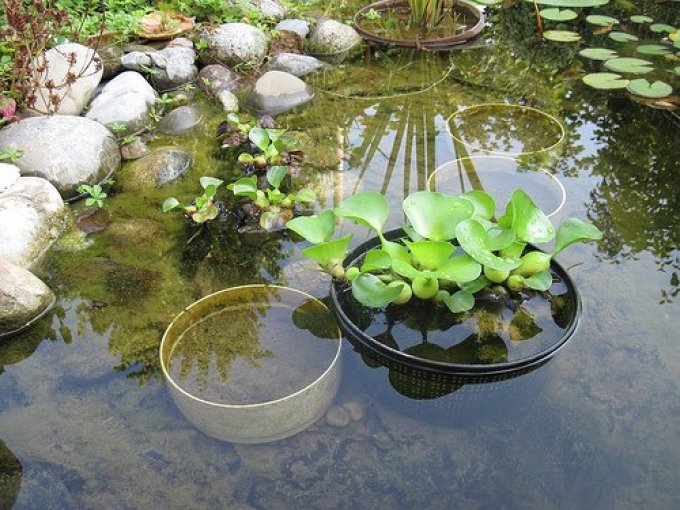
Although he is not whimsical in care, but if he grows in a pond, then in winter it needs to be taken for storage in the aquarium, and only in the spring you can be planted back when the water and air, again, will be a favorable temperature.
How to grow hyacinth from seeds, what do seeds look like?
All experienced gardeners know that hyacinths can be grown in several ways. The most common of them is the growing of bulbs. But also those who wish can try to grow hyacinth from seeds.
The seeds of this flower are small in size, black with small light edges. But it should be noted that the cultivation of a flower from the seeds is very long. So that you need to be patient in this case.
The seeds should be planted in prepared soil in the box in September-October. After that, for several years it will be necessary to grow hyacinth in cold greenhouses. But immediately the next year, flowers will not be able to see flowers.
With this method of growing, the first flowers will appear only for 5-6 years. That is why this method is most often used only for breeding purposes. And ordinary amateur gardeners choose the method of growing from bulbs.
Is it possible to keep hyacinths in the bedroom?
The bedroom in the house is a special place. After all, it is here that a person rests after a hard working day. Therefore, the conditions in this room should be the most comfortable.
In order to decorate the bedroom, make it more comfortable and beautiful, colors lovers often place a wide variety of flowers in it. But before putting a particular flower in the bedroom, you need to find out detailed information about its features (properties and aroma).
Many, even incredibly beautiful flowers should not be placed in the room due to the fact that they can be poisonous or fooling a person. Hyacinth is a plant with a persistent pleasant aroma.

It should not be placed in the bedroom, even a person who loves the aroma of these colors and does not suffer from allergies to its aroma. After all, the main purpose of the bedroom is to give a person the opportunity to relax and gain strength. If you still want to put a hyacinth at home, it is better to choose a living room or kitchen for this.
Video: Growing water hyacinth at home