

Using the husk from seeds.
Content
- Shell from the seeds of sunflower and pumpkin: benefits and harms
- How can I use the husk from sunflower and pumpkin seeds in the garden, what does it give for plants?
- Mulching and loosening the soil using the husk of seeds: how to do it?
- How to use a husk from sunflower and pumpkin seeds, as a fertilizer?
- How to make compost from the husk of pumpkin and sunflower seeds: recipe
- Is it possible to give chickens, pigs husk from seeds?
- How to use a husk from sunflower and pumpkin seeds, like a stove fuel?
- Video: Application of the husk from seeds
Most people, using pumpkin and sunflower seeds, simply throw the husk, without even thinking that this one is an unnecessary product, may even be very useful. So that you also do not make a similar mistake, we will try to tell in more detail about the beneficial properties of the husks of seeds, and we will also teach you how to use it correctly.
Shell from the seeds of sunflower and pumpkin: benefits and harms

As you probably already understood, the husk of the seeds has useful properties that allow it to be used in gardening and gardening. Its composition contains a huge amount of substances with antiseptic properties. Therefore, if you make them get into the soil, then for a long time you can forget about all kinds of harmful microorganisms that can provoke rot, mold and powdery dew.
Other beneficial properties of the husks of seeds:
- A rapid decrease in soil acidity. If you dig the husks of seeds into the ground for the winter, then in this way, start the natural process of alkali of the soil, and the acidity will come to the norm.
- Blocking the growth of fungal infections. As practice shows, the number of pathogens processed with husk shows, the number of pathogenic fungi is sharply reduced, which subsequently leads to the fact that plants grow healthy and strong without any additional processing.
- The structure of the soil improves. Such a product as a husk of seeds is ideal for loosening of compacted and heavy soil, which very negatively affects the growth of all plants. Thanks to the husk, it becomes more loose and this contributes to a better ingress of moisture and oxygen to the root system.
But unfortunately, with the improper use of the husk of seeds, it is capable of applying harm. In order for you not to harm your future crop, get acquainted with the negative properties of this product. Most often, problems appear if people lay a too thick layer of husk into the soil.
This leads to:
- This layer does not let in moisture, which leads to the fact that the plant begins to fade
- The earth under the husk over time is very compacted, which also affects the growth and development of the future crop
- The earth warms up more than usual and subsequently this leads to the death of plants
How can I use the husk from sunflower and pumpkin seeds in the garden, what does it give for plants?

If you carefully read our article, you probably realized that the husk of the seed in skillful hands can help that in late autumn a person collects a good harvest from his site. True, you must remember that in order for this product to benefit you, it should also be of good quality.
In view of this, you must follow it so that it does not have mold, which will contribute to the infection of the soil, and then plants. If you manage to find the highest quality product, then you will not only improve the quality of the soil, but also saturate it with a huge number of trace elements that are vital for all living plants for normal development.
Ways to use the husks of seeds:
- A natural remedy for mulching (the husk is not processed in any way)
- As a fertilizer (it is simply buried in the ground and allowed to overheat)
- Organic top dressing (in this case, the husk turns into ash, and then used during periods of intensive growth)
- Useful insecticide (in this case, you can prepare concentrated decoctions from the husk and treat them with sick plants)
Mulching and loosening the soil using the husk of seeds: how to do it?

Mulching is the process of sheltering the upper soil layer with organic material (in our case with husk seeds), to prevent the evaporation of moisture and overheating of the root system. Above, we have already mentioned that with non -compliance with mulching technology, a person can get the opposite result and lose the crop.
In view of this, if you do not want to face such problems, then adhere to the following rules:
- Bring mulching 2 times a year - in the fall after harvesting and in the spring, when all the plants are already rising above the ground. In both cases, the pledges of success will be a complete absence of weeds on the site and well -loined soil.
- If you mulch very dry soil, then first it will have to be well watered and be sure to wait until the water is absorbed and drops into the lower layers of the soil.
- Be sure to see that the mulch layer is not very thick. So it is believed that this indicator ideally should be 8 cm. But still experienced gardeners sometimes make a layer of mulch and 10-12 cm. If you mulch the site that is constantly in the shade, then the layer of mulch should be from 3 up to 5 cm.
- Also remember that mulching is best at temperature indicators +12- +20. In this case, the soil will maintain the temperature optimal for plant growth.
- If you know that later you will have to fertilize the soil, then do it before mulching in the way after this procedure fertilizer will advance a longer period to move to the root system.
As for loosening the soil, in this case, the husk is simply digging in the ground for the winter and gradually rolls in it until spring. Since the husk in its structure is quite rigid, it does not allow the soil to be very condensed, and in the end this leads to the fact that it becomes more loose and light.
How to use a husk from sunflower and pumpkin seeds, as a fertilizer?
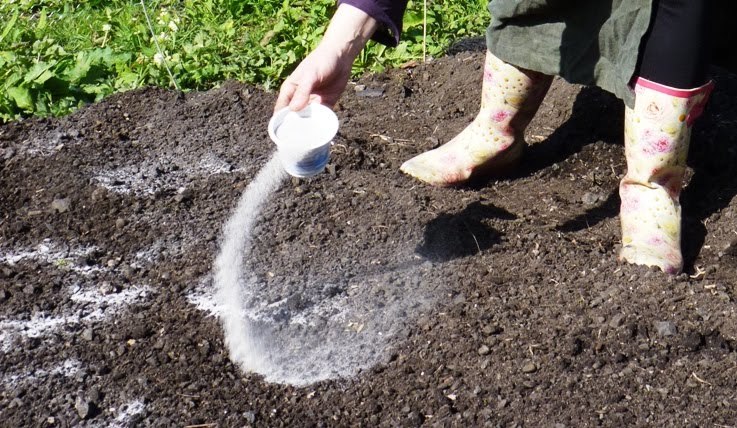
In principle, if you want to quickly and freely fertilize your area with husk seeds, then just dig them in the soil for the winter and let them overheat naturally. If you want this product to bring maximum benefit to garden crops, then spend a little of your time and turn the husk into ash. As practice shows, such a fertilizer more qualitatively saturates the soil with useful components, but most importantly, it can be used at any time of the year.
Recommendations for soil fertilizer with husk seeds:
- If you make ash in front of plowing, then you will need to use 3 kg of product for every 10 m2
- If the fertilizer is used to feed already growing plants, then it will be necessary to add 200-450 g to the soil for every 2 m2
- You can also prepare a solution from water and ash (at the rate of 3 kg of ash per 10 liters of water), and as necessary to pour the plants to them, having previously scared the soil
How to make compost from the husk of pumpkin and sunflower seeds: recipe

Few people guess that you can make high -quality organic compost very easily, and practically without costs. All that is needed for this is a little peat (you can take ordinary soil) and organics. In our case, we will prepare fertilizer using the husk of seeds.
So:
- First, prepare a barrel or wooden box in which you can add components of compost
- Previously soak the husk of the seeds in the water and let it be slightly discarded
- At the graying stage, fold a small layer of twigs to the bottom of the barrel or box (they will play the role of drainage that allows excess fluid)
- Put a layer of husk on a layer of branches. Its thickness should be approximately 50 cm
- Next, cover the husk with a layer of peat or soil with a thickness of 5 to 10 cm
- Continue to alternate the layers until the container is completely filled
- Cover it with a lid and leave alone for about 10-14 days
- After this time, slightly mix the mass (this must be done so that it is saturated with oxygen)
- Periodically check if the wet mass is enough in the barrel, and if necessary, moisturize it, not forgetting to mix it, be sure to mix it
- If you do everything right, then in the end you will receive compost, which will issue the aroma like something like forest soil
Is it possible to give chickens, pigs husk from seeds?

You can give a husk of seeds to chickens and pigs, but it must be done correctly. Firstly, you must remember that this product requires long-term digestion, so you need to strictly ensure that the pet does not eat it more than necessary. Ideally, the husk should be used as a nutritious top dressing. In view of this, it will be better if you mix it with vegetables, root crops and grain crops.
In this case, chickens and pigs will be saturated faster and, most importantly, to receive the maximum amount of nutrients with food that will stimulate their growth and development. Secondly, it must be borne in mind that it is advisable to give the crushed husk of seeds to small piglets and chickens. It will be better if you initially turn it into a kind of cake and only then you will introduce it into the diet of animals.
How to use a husk from sunflower and pumpkin seeds, like a stove fuel?
Probably, you have already heard that the husk from sunflower and pumpkin seeds can be used to heating the room. Yes, this product is the perfect fuel for the furnace as it burns for a very long time and practically does not leave ash. But still do not rush to collect the husk and use it instead of firewood. Rather, you can collect it, but there is no use in its pure form.
If you just put it in the furnace furnace, then during the combustion process, particles of seeds remaining in the husk will begin to rise, and this can provoke a fire. In view of this, if you want to heat your home with a husk of seeds, then initially make briquettes (by pressing the product) or just buy ready -made pellets.
Video: Application of the husk from seeds




Everything is accurate, on the contrary. The fungus develops in the ground with the husk of seeds, a fantastic pace