

What to do with coxarthrosis of the knee joint? Find out from the article.
Content
- What is coksartrosis of the hip joint?
- Signs of different degrees of coksartrosis of the hip joint, the cause of the occurrence
- Diagnosis of coksartrosis of the hip joint
- How and what is treated with coksartrosis of the hip joint medication?
- Koksartrosis exercises of the knee joint
- What to do with coksartrosis of the hip joint?
- Video: Effective treatment of coxarthrosis
Coksartrosis is one of the varieties of arthrosis, which affects the hip directly. Mostly the disease develops in older people.
What is coksartrosis of the hip joint?
Coksartrosis (also called osteoarthrosis, deforming arthrosis) is degenerative-dystrophic in nature and is usually inherent in older people. It is one- and bilateral, it depends on whether one or both limbs are affected. This disease is characterized by progression.
It is treated with medication at the primary stages, if the joint is destroyed, surgery is necessary. According to statistics, women are subject to coksartrosis more than men.

- A thicker articular liquid dries the surface of the cartilage, reduces its smoothness. Such roughness leads to trauma to the cartilage, and as a result - to the deformation of the bones, and later - to muscle atrophy.
- There is primary coksartrosis, which develops as a result of unknown causes, and secondary, as a result of another disease (Pertes disease, injury, inflammation, joint dysplasia, etc.). The reason may also be the obesity of the last degrees.
- In addition to the above risk factors, there is also a genetic one. It is due to the possibility of transmitting metabolic disorders, weakness of cartilage tissue and can, to a certain extent, increase the risk of the disease.
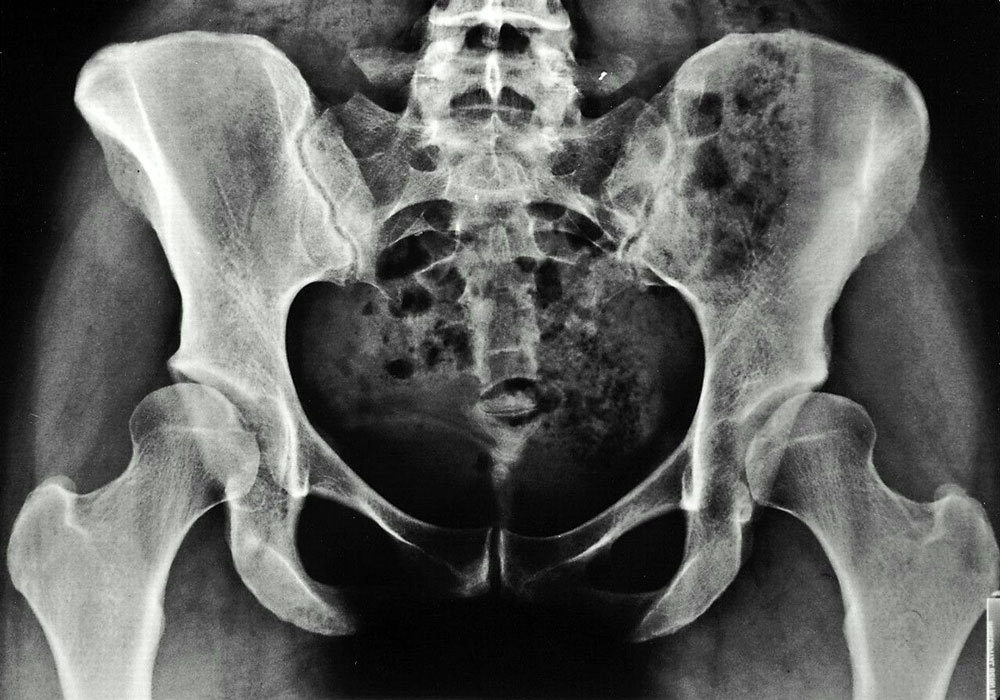
- The main tool for making a diagnosis, in addition to the clinical picture, is an X -ray picture, computed tomography, MRI is used for a more complete picture.
- Depending on where the destructive process is concentrated, there are coksartrosis of the upper or lower poles, the central part.
Signs of different degrees of coksartrosis of the hip joint, the cause of the occurrence
Signs of coksartrosis also change with the progression of the disease. This process can be conditionally divided into degrees.
Coksartrosis I degree
- It is characterized by a periodic insignificant pain that occurs in the groin (possibly in the lateral part of the thigh, a little less often in the knee region) most often due to physical exertion and disappear after the break.
- In a motionless state, a person does not feel any discomfort at all. Unfortunately, often precisely because of such imaginary well-being, many are in no hurry to see a doctor, although the first degree of disease, when changes in cartilage only begin, are the most favorable for a complete cure.
Coksartrosis of the II degree
- It is characterized by an increase in symptoms, the appearance of pain even after small physical exertion, and it can be felt in the entire thigh, to the level of the knee, less often lower than the knee.
- At this stage, muscle strength is reduced, light lameness can be observed. Changes in X -ray pictures become brighter, but now the treatment is becoming much more complicated.
Coksartrosis of the III degree
- The presence of chronic pains, and not only in the thigh, but throughout the leg.
- The time of transition to a stick or cane, without which it becomes problematic to move, the muscles atrophy, the leg can shorten.
- X -ray shows a substantially deformed joint, the joint gap is absent. And here it is already clear that drug treatment cannot be dispensed with.

Coksartrosis of the IV degree
- The joint becomes completely motionless.
Reasons, which provoke coksartrosis are:
- worsened blood supply
- operating on the hip joint
- spine deformation
- at an older age - injuries and their consequences
- minor physical activity
- inflammation of the joint
- problems with metabolism
- master of the hip bone and its necrosis
- hormonal disorders in the body
Diagnosis of coksartrosis of the hip joint
Coksartrosis is quite often confused with trochanteritis or inflammation of the femoral tendons, pear -shaped muscle syndrome and radicular syndrome, arthritis, rheumatic polymialgia.
Therefore, a set of methods is needed to eliminate errors in the diagnosis. These are already called radiography and MRI, less often - ultrasound, blood test.
- Analyzing the composition of the blood taken from the finger, it is possible to determine whether the rate of the erythrocyte settlement rate is normal. If it is higher than the norm, it is possible that the problem is associated with the inflammatory process. The increased content of leukocytes may also talk about this.
- With a biochemical analysis of blood (from vein), by the level of inflammation markers, it can be said more definitely, arthritis or arthrosis develops in the patient.
- X -ray is often able to immediately recognize the presence of changes in the joint, the picture is also visible in the picture.
- MRI reflects the processes occurring in cartilage.

Computed tomography or ultrasound of the joint is advisable if it is not possible to conduct an MRI. And, of course, a personal examination by a specialist is very important.
How and what is treated with coksartrosis of the hip joint medication?
In the initial stages, especially during periods of exacerbation, shown:
- indomethacin
- nimesulide
- diclofenac
- meloxicam
- ketoprofen
- ibuprofen, etc.
To restore deformed cartilage, use chondroprotectors (Arthra, chondroitin sulfate, teraflex, structum, chondrolone, glucosamine, etc.), they can be introduced through the thigh. To normalize blood circulation - vasodilators (nicotinic acid, nicotinate xanthinol, etc.). If necessary, are appointed relaxing muscles (Midokalm, Sirdalud). These muscle relaxants are part of a comprehensive treatment.

If the pain does not decrease, intra -articular injections are used:
- hydrocortisone
- diprospan
- flosteron
- triamcinolone
- kenalog
- scheduled
Intra -articular fluid that has lost the necessary properties replace hyaluronic acid preparations (Sinvis, farmatron, hyastat, sharp -to -do, etc.). To facilitate the condition are used warming, anti -inflammatory and analgesic ointments:
- voltaren Emulgel
- ortophen
- menovazin
- finalgon
- espopol
Koksartrosis exercises of the knee joint
Therapeutic gymnastics is the most effective when the joint is not finally affected. It reduces pain and reduces the inflammatory process as a whole, slows down the process of destruction of the joint, relaxes muscle tissue.
The patient remains mobile much longer. The main thing is to do exercises regularly, thus preventing the process of stagnation of the joint. The loads should be distributed to both legs and is given gradually, avoiding sudden movements.
In the primary stage of the disease, the following exercises are recommended:
- Lying on the stomach, smoothly raise the limb.
- Sitting to connect the legs, turning the heels, and carefully squeeze the ball, holding it between the knees. Lying on the back with knitted legs to make rising and descending movements, leaning on the palms and feet.
- Repeat these exercises 1-2 times in 10 approaches.
If the disease has moved to the second stage, such a complex is more appropriate:
- Holding on to a reliable support, squat and get up.
- Get up on the socks.
- Make circular movements with your foot.

For the third degree of coksartrosis, doctors have developed another group of movements:
- Standing straight and reliably leaning, shake his foot back and forth.
- Take a stretching tourniquet and, putting it on the foot, perform swings with a sick limb, avoiding muscle tension.
- Sit, leaning in the feet on the floor and breed bent legs.
- Sitting on the rug, bend over, holding out your hands to the footsteps.
- Do not do squats, walk a lot.
- As an additional exercise, self -massage of the thigh is good after physical education. It consists in massaging the side and front sides of the thigh from the knee in the direction of the groin.
What to do with coksartrosis of the hip joint?
The first thing to do is not waste time. If you do not start timely treatment, it is possible that you will have to resort to expensive endoprosthetics, which, alas, is not always successful.
- Active physical activity should be limited, limited to a complex of medical exercises. Do not get carried away with thermal procedures, the effect of cold on the joint helps much more effectively.
- If you already have to walk with a cane, rely on it holding it in the opposite hand, when you step on a sore foot, thereby transferring the center of gravity to the middle.
- Do not lift weights and do not stand for a long time.
- Proper nutrition is very important, contributing to the strengthening and updating of cartilage fibers. It is necessary to consume as many products containing magnesium, fluorine, ascorbic acid, phosphorus, organic acids: vegetables, fruits, cereals, seafood, offal broths, buckwheat, brown rice, pearl barley, oatmeal.
- Season the porridge with dried fruits, herbs.
- Solid cheese, fermented milk products are useful. Replace sugar with honey, and try to refrain from salt in principle.
- Do not include fatty meat, salted fish in the menu. Instead of sunflower oil, use linen or olive.

All these recommendations, carried out under the supervision of the attending physician, will complement drug treatment. Such an integrated approach to the healing process will help you return the mobility of the joint in the first stages of the disease and will facilitate well-being if you still launched the disease.
Video: Effective treatment of coxarthrosis




When I worsen, I accept the bathtubs, I take the turpentine pom’s method, they help to remove pain and discomfort very well. In the pharmacy I take a Skipar set with a mixed emulsion and breed a bath with it, I make a course of 15 baths. It becomes easier