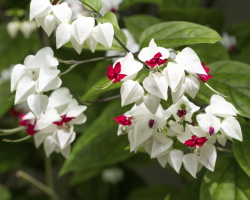

Often, buying parsley, already at home, cutting it, we understand by the smell that we acquired a cilantro. The same story happens to happen with dill and Fenhel. It turns out that cinnamon may also not be at all cinnamon, but a cassius that is very similar to it and the appearance.
In order not to make a mistake, let's figure out what the real cinnamon is.
Content
The origin of cinnamon and Cassia: is there a difference?
True cinnamon is the one that is obtained from the bark of wood with the same name - Coronic Ceylon. It belongs to the laurel family and grows on the coast of the Indian Ocean, in the western part of India, as well as in the island state of Sri Lanka. The tubes known to us, in the form of which we know this spice, are obtained from the inner layer of the bark of three -year -old trees by drying them under the rays of the sun and twisting, which is carried out manually.

- The homeland of Cassia is completely different countries - Vietnam, China, Indonesia. In addition, its production is much less costly and specific: older trees are used, the bark is not classified into the internal and outer parts, but goes into the whole processing.
- Of course, since the tree is by and large the same thing, then the properties of cinnamon and Cassia are similar. And often they can only be distinguished in comparison by trying or sniffing in turn.
- But in general, it should be remembered that the fragrance of the Cassia is more muffled compared to cinnamon, and the taste qualities are lower. In addition, the cassia contains a hundred times more kumarin than cinnamon, which may not affect human health in the best way.

What is kumarin? The word of French origin, denoting an organic compound containing oxygen obtained by synthetically. In addition to confectionery industry, it is used in the manufacture of soap, perfumery products.
Where is the cassia and where the cinnamon: distinguishing features
Here are a few rules that should be remembered in order to distinguish cinnamon from Cassia.
- As a rule, Latin names are written on packages. If you see the word “fragrant” in the composition (it looks like “aromaticum”), then you have a cashier.
- Pay attention to the manufacturer. Sri Lanka speaks of cinnamon, everything else gives out a cashier.
- Drill in a small amount of powder you bought with ordinary iodine. The blue color of the powder indicates that in front of you is the cinnamon, almost black speaks of Cassia.
- Cinnamon (ground, of course) when the boiling water forms the consistency of mucus.
- Real gourmets buy cinnamon in the form of sticks. In this case, it is much easier to understand what is in front of you. Cinnamon is thin light sticks, evenly and equally painted on all sides, resembling a papyrus, twisted many times. Cassia has the appearance of thick, unevenly painted from the inside and outside the tubes, rolled, as a rule, once or twice.
- They also differ in taste and smell. The cinnamon is sweeter and softer, the cassia is more “poisonous” in saturation, there are less sweets in it. But the smell of Cassia is much rougher and sweeter than a thin soft aroma of cinnamon.
- Cinnamon costs at least three times more expensive than Cassia.
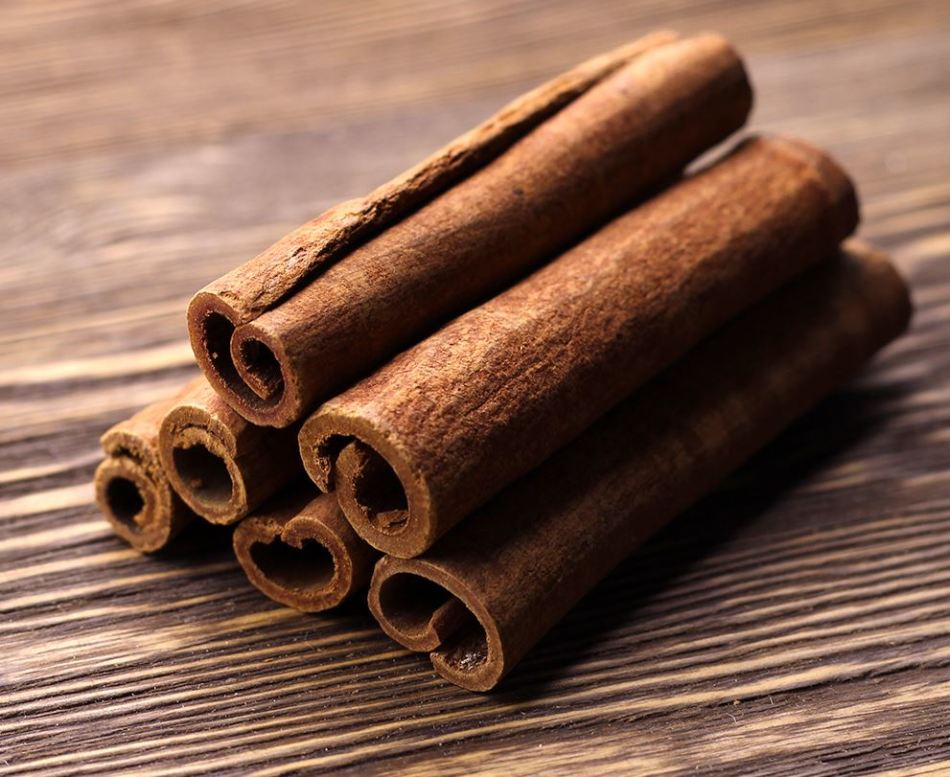
Now you know almost everything about this wonderful eastern spice and is unlikely to confuse it with Cassia.
Video: Cinnamon or Cassia?